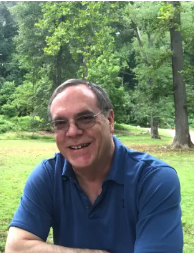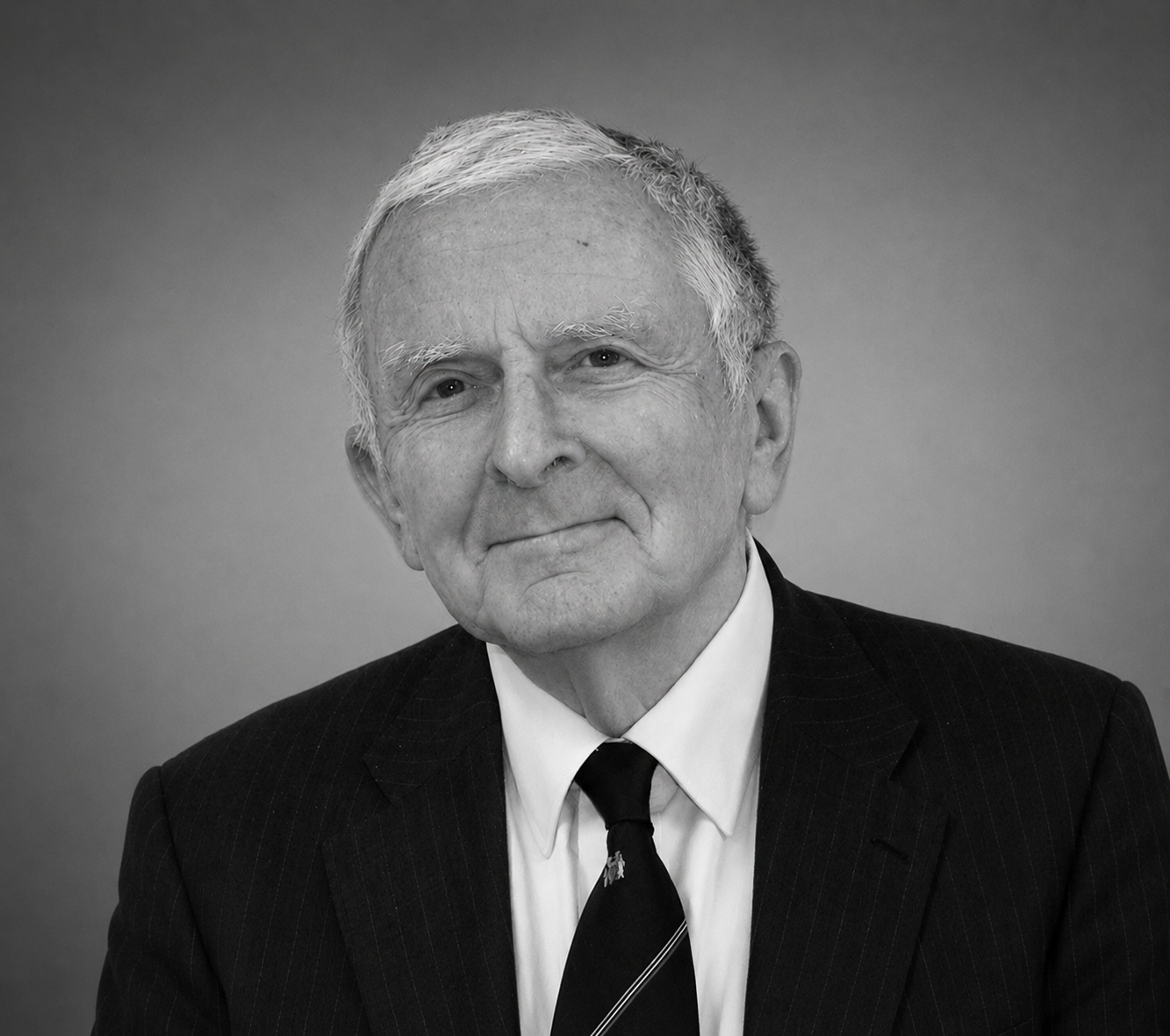
Professor Colin J Green

It is with immense sadness that we report the death of Colin, who has been an ardent supporter of Society for Low Temperature Biology throughout his long and distinguished career. He passed away at home recently after a short illness, surrounded by his family; he was 91 years old.

Colin was involved from the start of his career with low temperature biology and the power which this offered to help in medicine and surgery.  After training as a veterinarian and a spell in practice, he moved to join the group based at MRC Mill Hill in London. He joined the group which David Pegg was building to pioneer research and application of low temperatures in the early 1970s, which was to be the basis of the new Department of Low Temperature Biology at the Clinical Research Centre in Harrow in London. From 1974 onward Colin built an experimental transplant group developing new methods of organ cold preservation and perfusion which were taken up by many units around the globe as clinical organ transplants became a novel accepted medical treatment. They published some of the earliest landmark papers in that topic. Colin was always active in SLTB at the same time, and held several positions including Chair in the 1980’s. At the annual meeting in 1983 in Paris he met representatives from the Institute of Cryobiology and Cryomedicine of Ukraine Academy of Sciences in Kharkov, which developed into another fruitful collaboration and led to the establishment of the UNESCO Chair in Cryobiology, which he continued to support throughout his life.  Also in the 1980’s, Colin directed his expertise in surgery and organ preservation to help the Royal Free Hospital, part of UCL Medical School, to begin a clinical liver transplant programme which thrives to this day. He was awarded Professorship in UCL Medical School, alongside his Professorship in the UNESCO Chair. He was also awarded the degree of DSc by UCL in the early 2000’s.        

In the 1990’s Colin established Northwick Park Institute for Medical Research in Harrow which pioneered a mix of academic and commercial research and allied health teaching, again strongly linked to UCL with many joint projects, PhD studentships and undergraduate courses.

Colin’s interests in medical education, and his ambition that everybody on a global basis should benefit from improved health, education and life opportunities (no matter what their material circumstances) led him to establish the medical education charity IMET2000 with active programmes in economically challenged parts of the world (including the Middle East, former Soviet States, and Africa). As a founding professor in the UNESCO Chair in Cryobiology in the Ukraine Academy of Sciences, he was awarded the status of Academician in the early 2000’s.  Colin continued to apply his knowledge and enthusiasm for low temperature science across many of these areas. Beyond SLTB his expertise was acknowledged in the many other Societies with which he interacted, including the British Transplant Society and International Society for Cryobiology.       

Colin was a truly unique person with the ability to discuss science and medicine with all comers, no matter what their status, in an encouraging and non-judgemental way. His legacy will be the success of the large cohort of people around the world whom he helped over the years, and are now going on themselves to work towards better health and opportunities for all.  Those who worked with him recall not only his intellectual energy but also his warmth, humour and ability to inspire others. He had a rare gift for bringing people together around ambitious projects and sustaining their commitment over many years.

He is survived by his wife, Liz, three children, six grandchildren and two great-grandchildren.
SLTB2025 Announced

It is with great pleasure that we invite you to attend the upcoming 61st Meeting of the Society for Low Temperature Biology, to be held at the Institute of Animal Reproduction and Food Research of the Polish Academy of Sciences at the on September 11-13, 2025. More details can be found here


In memoriam Dr. William Frederick Rall (1951-2024)

In memoriam

Dr. William Frederick Rall (1951-2024)

Dr. William Frederick “Bill” Rall, 72, of Rockville, Maryland, peacefully departed this life on January 13, 2024, at Alfred House Assisted Living.

Bill was born in Bay Shore, New York on May 31, 1951, to William Alfred and Margaret Dorothy Rall. He grew up on Long Island, NY, the second of three children and the only boy. He received a B.A. degree in Physics from SUNY at New Paltz, where he met his wife Jane, and a Ph.D. in Biomedical Science from the University of Tennessee.

After receiving his Ph.D, Bill did post-doctoral research in cryobiology and reproductive physiology with the U.K.’s Medical and Agricultural Research Councils in London and Cambridge. Upon their return to the US, he continued his research at the American Red Cross in Bethesda, where he and a colleague were the first to demonstrate the viability of a technique for freezing mammalian embryos that is now the basis for what is used in human IVF.

After moving the family briefly to San Antonio, Texas to do further research on cattle embryo transfer and preservation, he returned to Maryland and worked at the Smithsonian/National Zoo to help preserve endangered species including the Eld’s deer of SE Asia. In the early 2000s he worked at the National Institutes of Health where he set up a frozen embryo bank of research animal models, saving the American taxpayer the expense of maintaining their live animal colonies. Later, he provided oversight for over 65 active grants through NIH’s National Center for Research Resources Division of Comparative Medicine. Throughout his career, Bill collaborated with research scientists in the U.K., the Netherlands and Hawaii, and spoke at scientific conferences in the U.K., Sweden/Denmark, Italy, Belgium, France, Canada and Australia. He was always willing and excited to open his home to host colleagues and friends.

Bill was an active member of Faith United Methodist Church, including spending many years as the usher coordinator. He also volunteered as an Assistant Scoutmaster for Boy Scout Troop 447. Bill was passionate about promoting science education, and over the years mentored many graduate, post-graduate, and early career scientists. In his free time, he also enjoyed traveling, cruises, and chiming into conversations that were happening in the kitchen from his computer upstairs.

By the time he was diagnosed with dementia (at the age of 57) he had presented 25 invited talks at scientific conferences and workshops; contributed more than 60 abstracts for oral or poster presentations; and published 59 peer-reviewed research, book chapters and review papers. His work has been highly cited by other scientific investigators. Bill received a Distinguished Scientist, Reproductive Biology award from the American Society for Reproductive Medicine in 2010 and was made a Fellow of the Society for Cryobiology in 2013.

Beyond the long and distinguished career which Bill undertook in the USA and associated with the Society for Cryobiology, in his early years as a postdoctoral fellow, Bill spent some years in Cambridge at the start of the 1980’s. He worked at the Animal Research Station under the leadership of

Professor Chris Polge, and his work was highly successful in the area of reproductive cryobiology, at a time when the scientific world was just recognising the potential of embryo and sperm cryopreservation. With David Reid, Bill developed on the of first working cryomicroscopes in the UK, which allowed him in Cambridge to probe many of the fundamental properties of ice nucleation, ice crystal growth and  the ‘glassy’ transitions which up until that time had only been partially described. With Chris and Maureen Wood, he was able to describe cryobiological events during freezing in murine and bovine embryos, and interactions between warming conditions and ice recrystallization. Several important publications arose from the Polge –Rall interactions in those years.

Bill’s interest in the ‘glassy’ transitions also led him to collaborate with Greg Fahy in the concept of embryo vitrification, which led to the seminal Nature publication in 1985 on recovery of murine embryos after a vtrifictation protocol. During his time in Cambridge, Bill attended several SLTB meetings and was always keen to discuss his work in the relaxed environments they engendered. Bill was always kind and generous towards other colleagues and students, and lit up discussions with his ‘blue skies’ lateral thinking. He will be sadly missed.      


Rall WF, Reid DS, Farrant J. Innocuous biological freezing during warming.Nature. 1980 Jul 31;286(5772):511-4. doi: 10.1038/286511a0. PMID: 7402331 No abstract available.

Rall WF, Fahy GM. Ice-free cryopreservation of mouse embryos at -196 degrees C by vitrification. Nature. 1985 Feb 14-20;313(6003):573-5. doi: 10.1038/313573a0. PMID: 3969158

Rall WF, Czlonkowska M, Barton SC, Polge C. Cryoprotection of day-4 mouse embryos by methanol. J Reprod Fertil. 1984 Jan;70(1):293-300. doi: 10.1530/jrf.0.0700293. PMID: 6363691

Rall WF, Reid DS, Polge C.  Analysis of slow-warming injury of mouse embryos by cryomicroscopical and physiochemical methods. Cryobiology. 1984 Feb;21(1):106-21. doi: 10.1016/0011-2240(84)90027-0. PMID: 6713935 No abstract available.

Lehn-Jensen H, Rall WF. Cryomicroscopic observations of cattle embryos during freezing and thawing. Theriogenology. 1983 Feb;19(2):263-77. doi: 10.1016/0093-691x(83)90013-4. PMID: 16725794

Rall WF, Polge C. Effect of warming rate on mouse embryos frozen and thawed in glycerol. J Reprod Fertil. 1984 Jan;70(1):285-92. doi: 10.1530/jrf.0.0700285. PMID: 6363690

Rall WF, Wood MJ, Kirby C, Whittingham DG. Development of mouse embryos cryopreserved by vitrification.J Reprod Fertil. 1987 Jul;80(2):499-504. doi: 10.1530/jrf.0.0800499. PMID: 3656282