
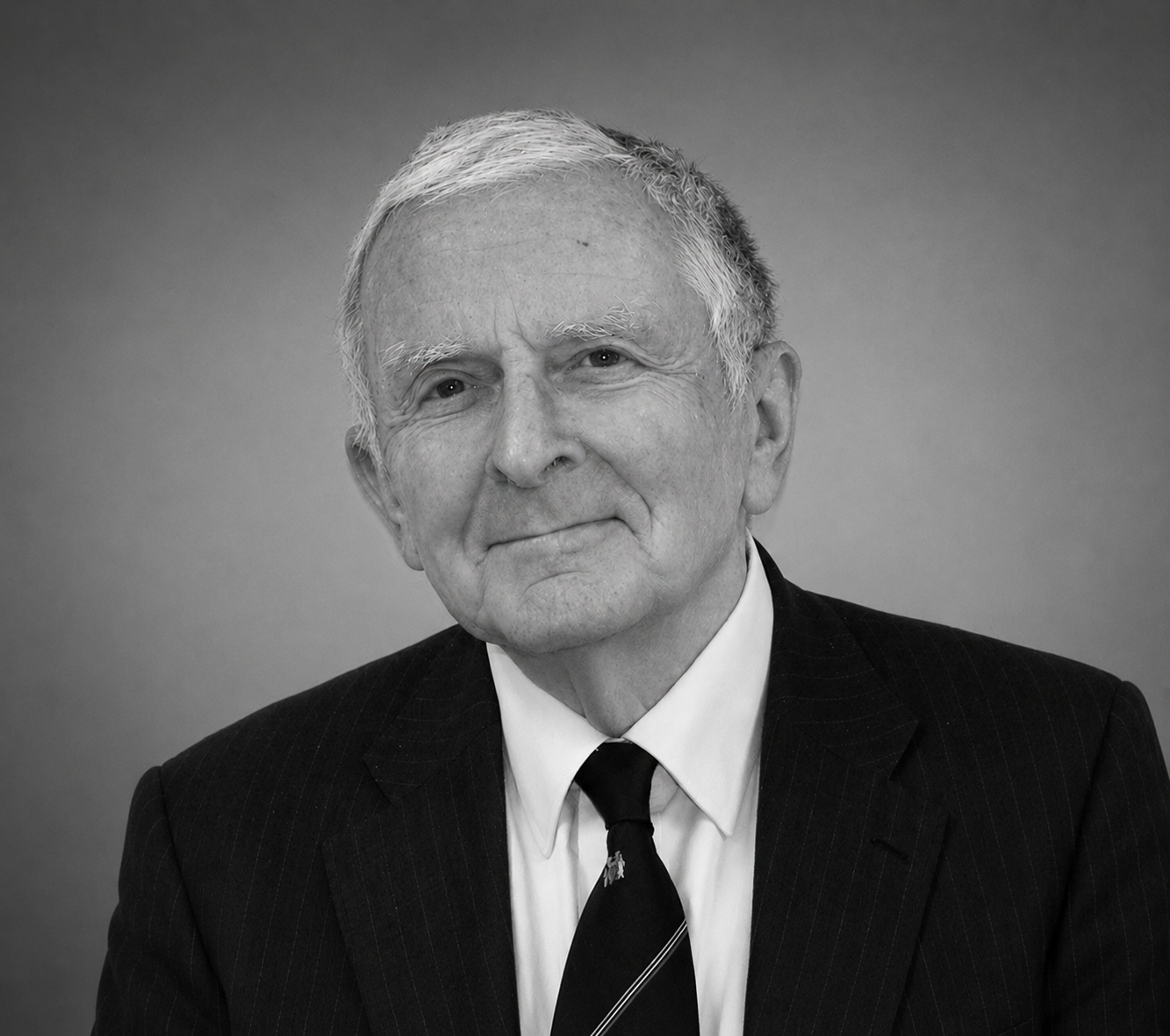
It is with immense sadness that we report the death of Colin, who has been an ardent supporter of Society for Low Temperature Biology throughout his long and distinguished career. He passed away at home recently after a short illness, surrounded by his family; he was 91 years old.
Colin was involved from the start of his career with low temperature biology and the power which this offered to help in medicine and surgery. After training as a veterinarian and a spell in practice, he moved to join the group based at MRC Mill Hill in London. He joined the group which David Pegg was building to pioneer research and application of low temperatures in the early 1970s, which was to be the basis of the new Department of Low Temperature Biology at the Clinical Research Centre in Harrow in London. From 1974 onward Colin built an experimental transplant group developing new methods of organ cold preservation and perfusion which were taken up by many units around the globe as clinical organ transplants became a novel accepted medical treatment. They published some of the earliest landmark papers in that topic. Colin was always active in SLTB at the same time, and held several positions including Chair in the 1980’s. At the annual meeting in 1983 in Paris he met representatives from the Institute of Cryobiology and Cryomedicine of Ukraine Academy of Sciences in Kharkov, which developed into another fruitful collaboration and led to the establishment of the UNESCO Chair in Cryobiology, which he continued to support throughout his life. Also in the 1980’s, Colin directed his expertise in surgery and organ preservation to help the Royal Free Hospital, part of UCL Medical School, to begin a clinical liver transplant programme which thrives to this day. He was awarded Professorship in UCL Medical School, alongside his Professorship in the UNESCO Chair. He was also awarded the degree of DSc by UCL in the early 2000’s.
In the 1990’s Colin established Northwick Park Institute for Medical Research in Harrow which pioneered a mix of academic and commercial research and allied health teaching, again strongly linked to UCL with many joint projects, PhD studentships and undergraduate courses.
Colin’s interests in medical education, and his ambition that everybody on a global basis should benefit from improved health, education and life opportunities (no matter what their material circumstances) led him to establish the medical education charity IMET2000 with active programmes in economically challenged parts of the world (including the Middle East, former Soviet States, and Africa). As a founding professor in the UNESCO Chair in Cryobiology in the Ukraine Academy of Sciences, he was awarded the status of Academician in the early 2000’s. Colin continued to apply his knowledge and enthusiasm for low temperature science across many of these areas. Beyond SLTB his expertise was acknowledged in the many other Societies with which he interacted, including the British Transplant Society and International Society for Cryobiology.
Colin was a truly unique person with the ability to discuss science and medicine with all comers, no matter what their status, in an encouraging and non-judgemental way. His legacy will be the success of the large cohort of people around the world whom he helped over the years, and are now going on themselves to work towards better health and opportunities for all. Those who worked with him recall not only his intellectual energy but also his warmth, humour and ability to inspire others. He had a rare gift for bringing people together around ambitious projects and sustaining their commitment over many years.
He is survived by his wife, Liz, three children, six grandchildren and two great-grandchildren.